
Land Rover Defender 110 Hard Top
The Defender 110 Hard Top combines 2,059 litres of secure loadspace, 3,500kg towing capacity and serious off-road ability with a level of refinement its ancestors could scarcely have imagined. But does that make it a better rural business vehicle?

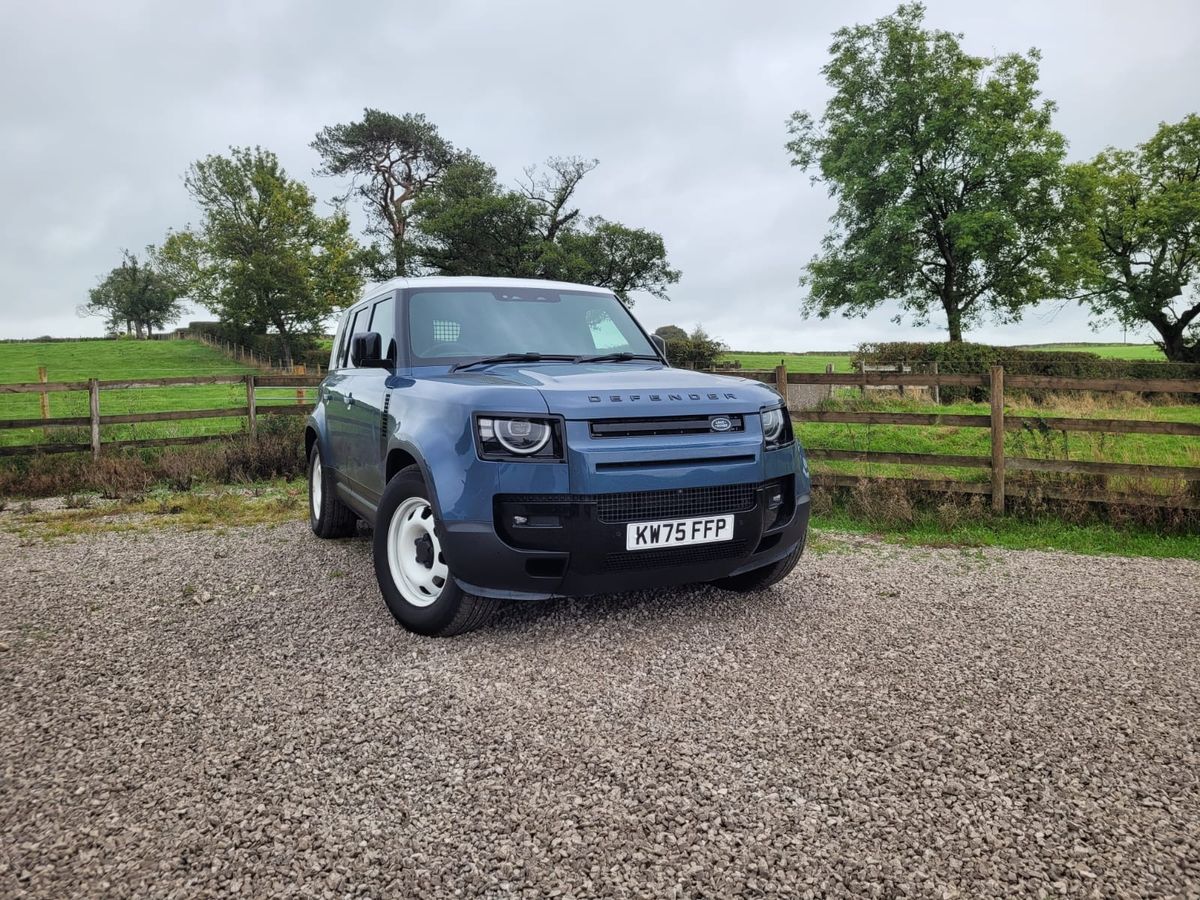
The Defender Goes Back to Work
There is a slightly awkward question hanging over every modern Defender.
Is it still a working vehicle?
Not whether it can cross difficult ground. There is little doubt about that.
Not whether it can tow.
Not whether it carries one of the most recognisable names in British motoring.
But whether, after decades of farmers, contractors, estates and rural businesses treating Defender as a tool, the modern interpretation still makes sense when the job involves muddy boots, fencing equipment, trailers, feed, saddles, tools and the various objects that rural businesses seem to acquire without anybody being entirely sure where they came from.
That is where the Defender 110 Hard Top becomes interesting.
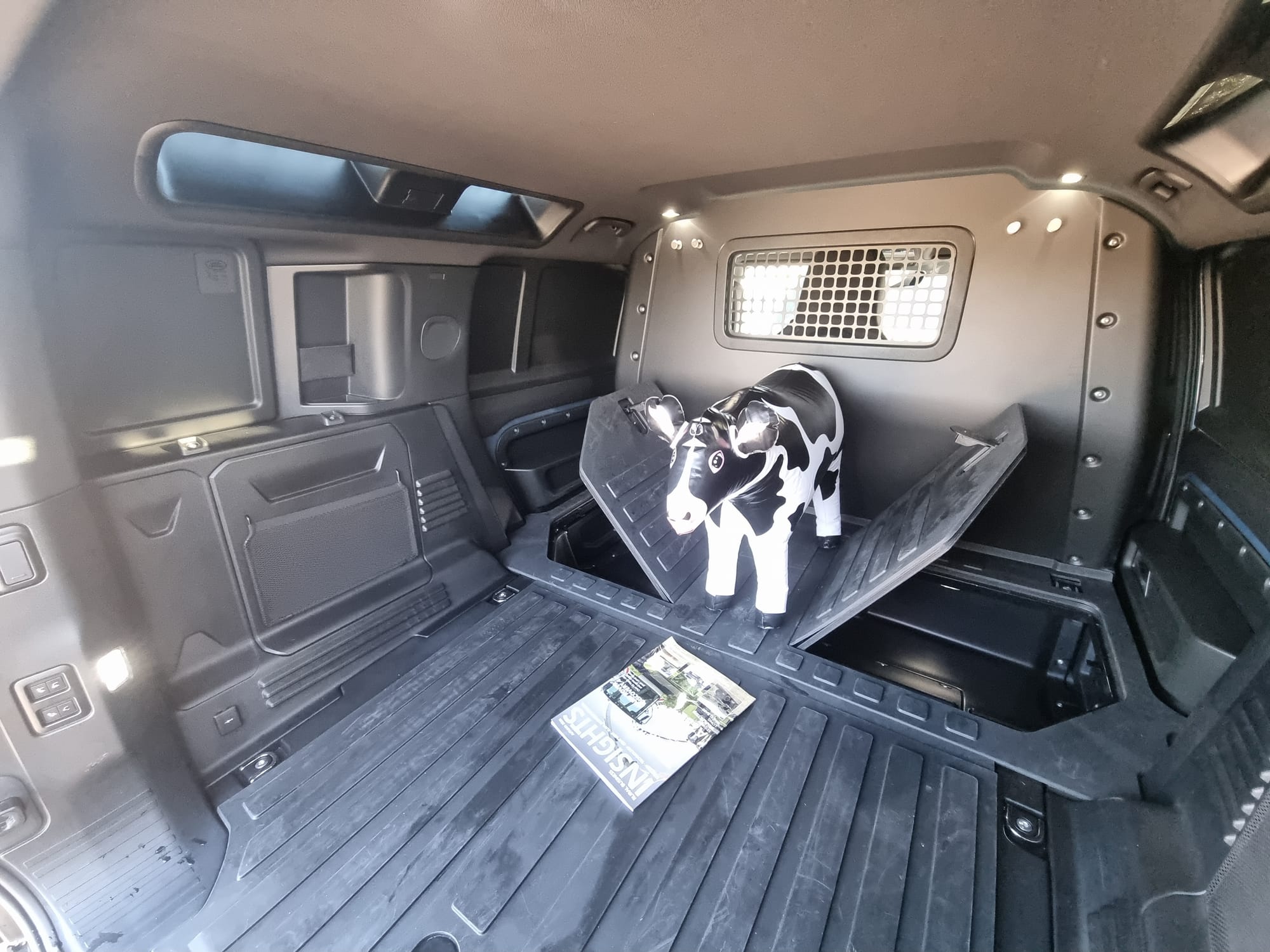
JLR positions the Hard Top explicitly as a commercial vehicle. The current 110 provides 2,059 litres of wet load volume, a loadspace measuring up to 1,472mm long, 1,423mm wide and 937mm high, plus illuminated and lockable underfloor storage. It is classified as an N1 commercial vehicle.
In other words, this isn't simply a passenger Defender with its back seats folded down.
And after several days using one in the Peak District and Staffordshire Moorlands, that distinction is both its greatest strength and, occasionally, the thing that made us wonder whether we actually needed it.
A Proper Load Bay
Open the rear door and the Hard Top immediately makes its case.
There's a full-height bulkhead behind the cabin, a virtually flat rubberised load floor and proper storage underneath it.
The 110 provides 155 litres of forward underfloor storage accessible through the side and rear doors, plus a further 58 litres at the rear. JLR also provides six fixed lashing points beneath the removable heavy-duty load mat.
It feels designed as a commercial load compartment, rather than like somebody finished building a passenger car and subsequently remembered they'd promised a van.
That matters.
Earlier examples attracted criticism for some slightly awkward protrusions and load-area detailing. On our test vehicle, the finish around the storage lids, catches and adjoining surfaces felt considerably better integrated.
We particularly liked the rubberised floor.
It is practical, grippy and far more appropriate here than carpet.
One of our storage lids did occasionally interact rather enthusiastically with the edge of the flooring.
Nothing that couldn't be solved with a little fettling but, at this price, we probably wouldn't advise approaching a new Defender with a Stanley knife before breakfast.
The 1,472mm load length also needs considering against what you actually carry.
Bales, tools, saddles, bags and shorter fencing materials? Excellent.
Five-foot-plus fence posts?
Measure twice.
Those Rear Doors Are Rather Clever
The retained rear passenger doors initially look slightly peculiar.
There are no rear passenger seats to reach, after all.
But dismiss them as redundant bodywork and you'd miss one of the Hard Top's more useful details.
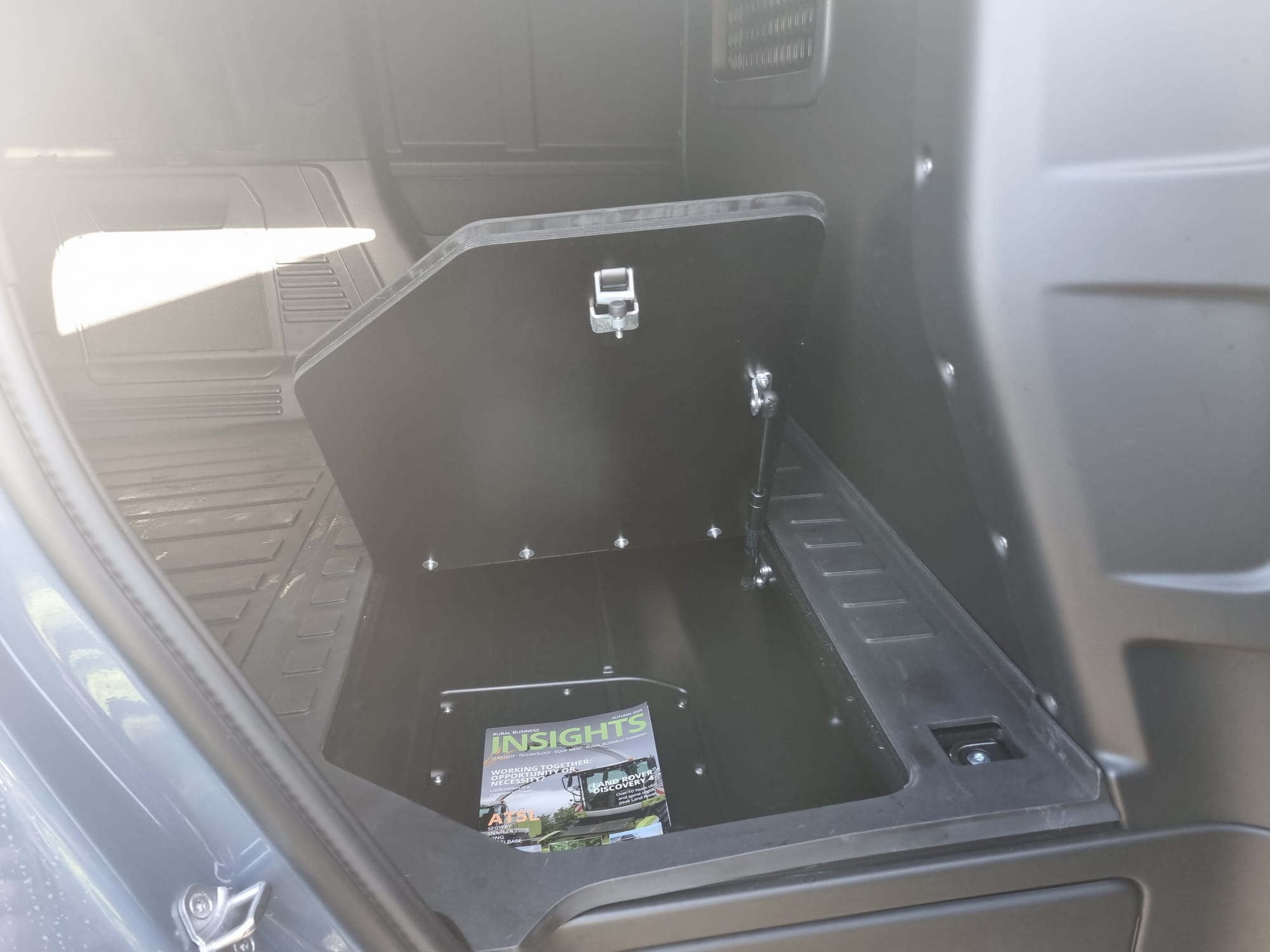
Open them and you gain access to the forward underfloor storage without having to unload everything through the back.
JLR specifically identifies the 110 Hard Top's side-opening doors as a means of accessing its underfloor storage.
In day-to-day use, that works.
Tools, smaller items and valuable equipment can disappear below the load floor and remain accessible from the side.
It's one of those features that doesn't photograph terribly dramatically yet may prove more useful after six months than something involving ambient lighting and seventeen different interior colours.
Please keep the apparently pointless doors.
They're not pointless.
Three Seats. Technically.
Then we arrive at the jump seat.
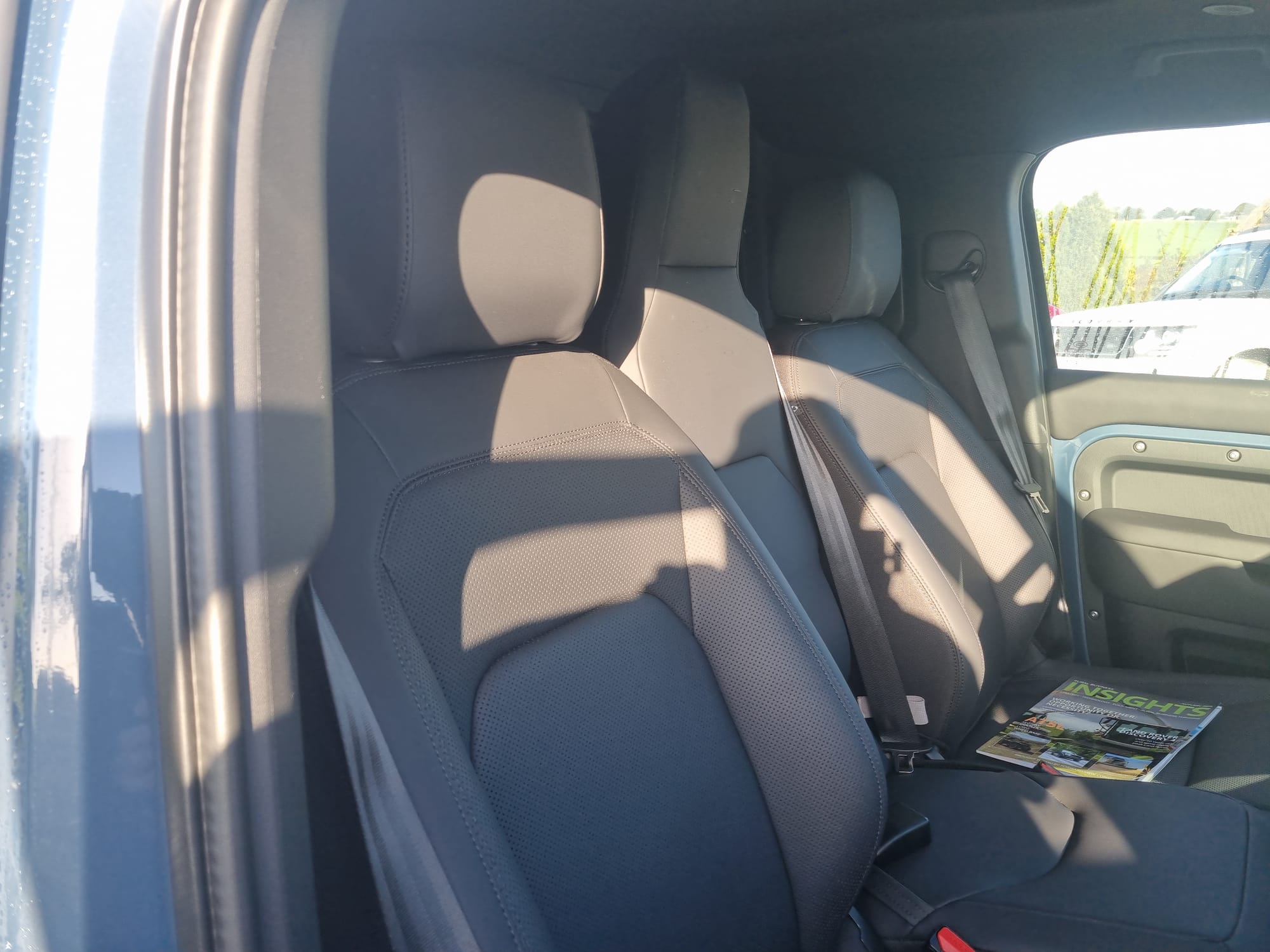
JLR describes the optional front-row jump seat as allowing three people in the cabin, folding down into an armrest with cupholders when not required.
This sounded particularly interesting for rural businesses.
And, incidentally, for another slightly questionable RBI project involving three presenters and a rural road trip.
That was before three adults actually sat in it.
Our conclusion is fairly simple:
Three seats does not necessarily mean three comfortable adult travelling positions. (Click to watch Dave get in a Jump Seat).
The centre position is narrow. It also places the occupant appreciably higher than the driver and conventional passenger.
Leg and foot positioning is compromised by the transmission tunnel and centre-console area.
And three adults inevitably encroach upon one another.
Around a farm?
Potentially useful.
Moving an extra worker between nearby sites?
Fine.
Three adults spending several hours touring Britain's rural economy?
Plans were reconsidered.
Rapidly.
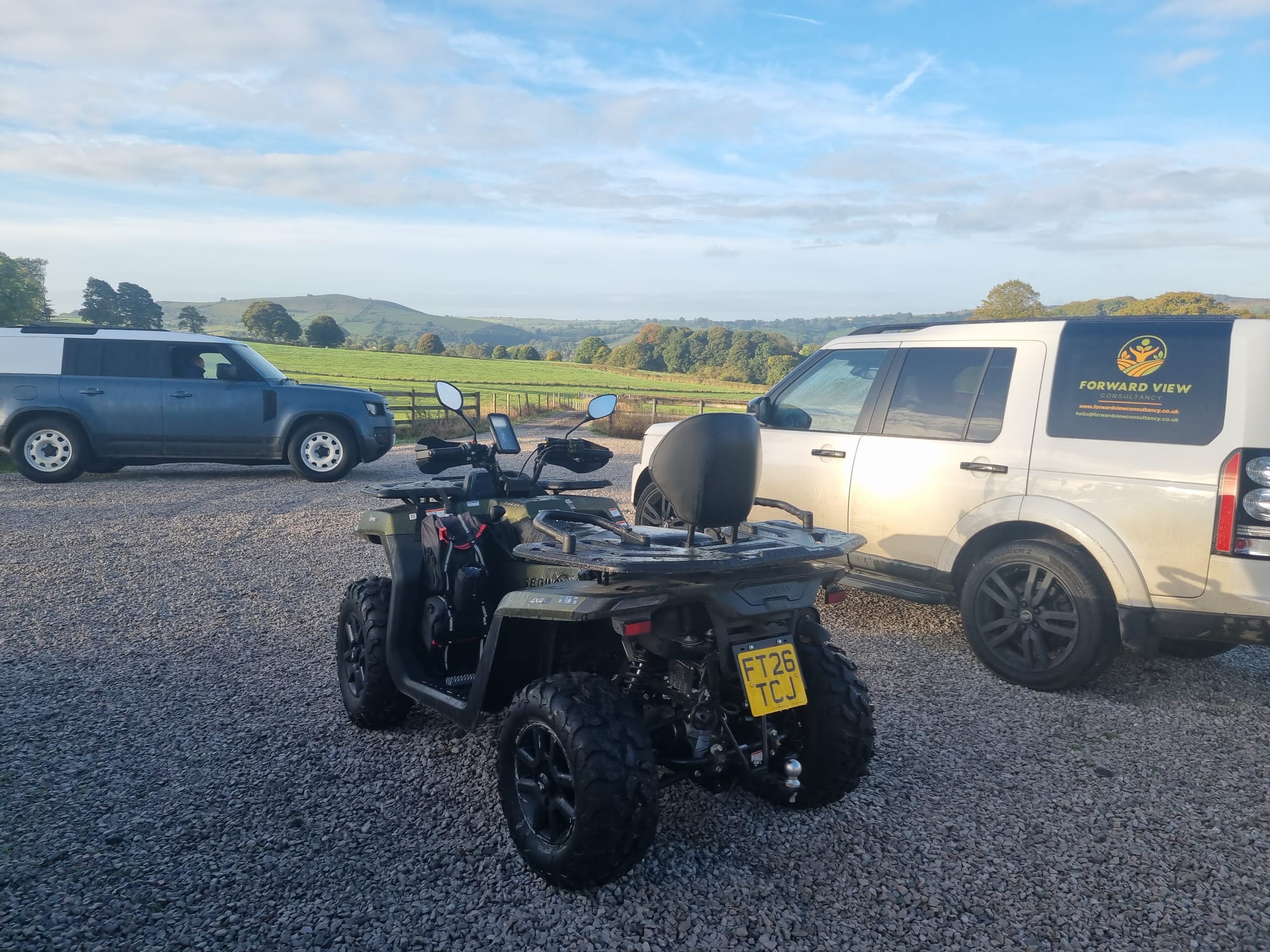
But Don't Dismiss the Jump Seat
There are nevertheless rural scenarios where we can see it earning its keep.
Family farming and equestrian enterprises immediately come to mind because another occasional seating position could genuinely be useful.
The important thing is establishing whether the arrangement suits the actual people who need to travel, rather than buying three seats because the configurator says three seats.
For two adults, though, accommodation is excellent.
And that produced a slightly inconvenient observation for us.
Coming from a fleet containing Discovery 4s, we expected Defender to feel dramatically different.
It doesn't always.
The Discovery 4 remains an annoyingly good benchmark.
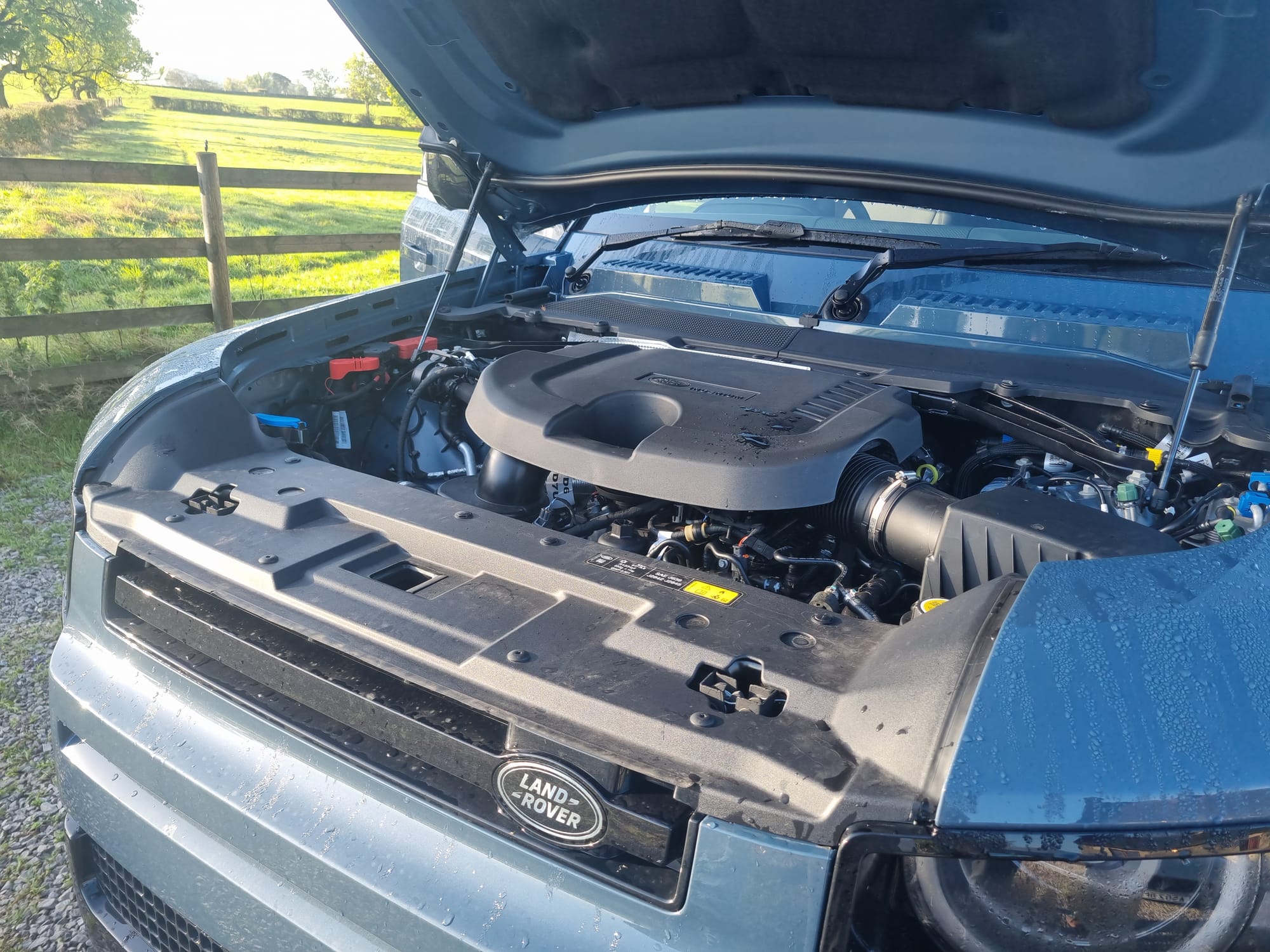
D250: Plenty
Our test vehicle used JLR's 2,997cc six-cylinder D250 mild-hybrid diesel, producing 249hp and 570Nm between 1,250 and 2,500rpm. JLR couples it to an eight-speed automatic transmission and all-wheel drive.
For what we were doing, we never needed more.
And it's difficult to imagine many conventional rural-business situations where 570Nm is insufficient.
There are more powerful Defender engines.
That doesn't mean most working users need them.
The D250's character is interesting, though.
Compared with the older SDV6 we're accustomed to, the inline-six sometimes feels less immediately forthcoming.
That's not a criticism of performance.
It's an observation about character.
And we confess to a certain affection for the older V6. Familiarity may be doing some heavy lifting there, but owning older Land Rovers has never been entirely rational.
The gearbox, meanwhile, is exactly how a good automatic should be.
Mostly invisible.
Towing Might Be the Killer Feature
This is where the Defender begins making rather a lot of sense for equestrian, livestock and contracting businesses.
JLR specifies the 110 D250 Hard Top for up to 3,500kg braked towing, with a maximum coupling-point load of 150kg on the specification we checked.
But numbers tell only half the story.
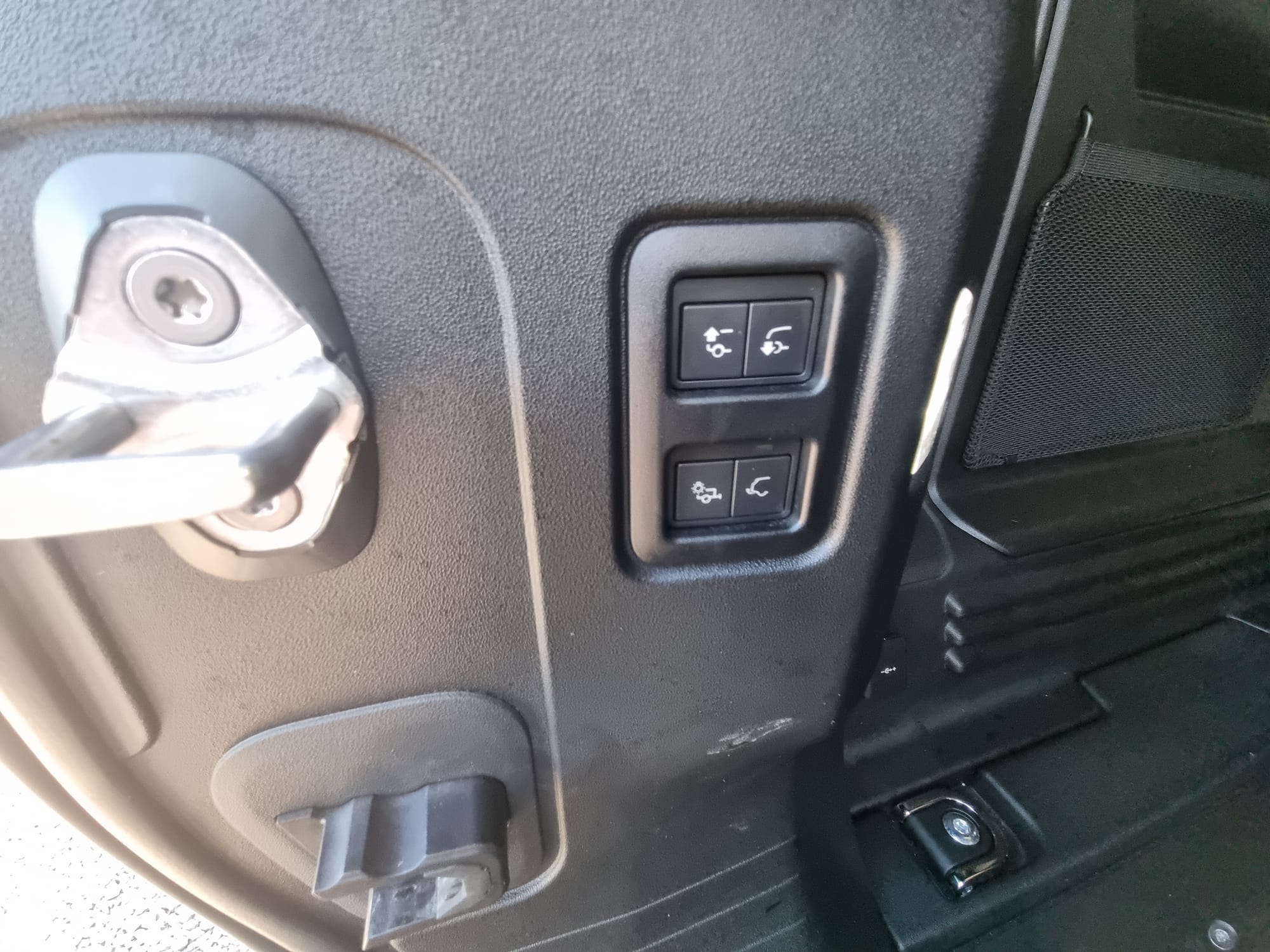
Our vehicle's electrically deployable towbar was superb.
JLR's system stows discreetly behind the rear bumper, deploys in around 12 seconds, incorporates 13-pin electrics and can be operated through the loadspace or infotainment controls.
Press button.
Towbar appears.
Attach trailer.
No crawling beneath the bumper.
No detachable component living underneath the back seat until somebody needs it, at which point tradition dictates that nobody remembers where it was put.
It is exactly the sort of premium feature that earns its place by making a routine job easier.
Add the camera technology and that's potentially even more useful.
JLR's towing technology includes Tow Hitch Assist, which can display the tow ball and predicted path on the screen to help with coupling. The wider camera system can provide a near-360-degree exterior view.
Our only disappointment?
We couldn't download the camera footage afterwards.
RBI's production department considers this an outrageous oversight.
Air Suspension: Useful, Rather Than Theatrical
Air suspension can sometimes feel like engineering deployed because engineering was available.
Not here.
Being able to alter rear ride height when loading is genuinely useful.
Lowering the back of a vehicle reduces the lift when loading:
- heavy bags;
- tools;
- saddles;
- equipment;
- whatever miscellaneous rural-business object somebody has just bought because “it might come in handy”.
On difficult ground, the opposite applies.
During normal off-road use the Defender didn't reveal some enormous practical gulf over our Discovery 4s. Both remain remarkably sure-footed in the kind of conditions most rural users actually encounter.
But the Defender's ability to raise further is meaningful when clearance becomes the limiting factor.
The distinction may therefore not be:
Can it cross this field?
but:
At what point does the additional suspension travel and clearance actually become necessary?
For some businesses, rarely.
For others, that one occasion may justify the whole thing.
Switches, Screens and Muddy Fingers
The interior strikes an interesting compromise between utility and modern premium vehicle.
The rubber flooring feels correct.
So does retaining proper physical HVAC controls.
With gloves on, buttons and rotary controls remain enormously preferable to accurately prodding a flat piece of glass while the vehicle moves along a rough track.
Our test vehicle's largely manual seat-base adjustment made sense for the same reason.
When swapping drivers quickly, you grab the lever, move the seat and get on with it.
No menu.
No waiting.
No ceremony.
Some technology genuinely improves work.
Some technology turns moving a seat into an IT project.
The Defender mostly knows which is which.
Mostly.
Pivi Pro Requires Acquaintance
The newer Defender range now uses a 13.1-inch Pivi Pro touchscreen, while earlier vehicles, depending on model year, were offered with the 11.4-inch system. JLR's current Defender 110 specification includes Android Auto and Apple CarPlay alongside Pivi Pro.
Our screen was large and impressively clear.
Immediately intuitive?
Not entirely.
Android Auto adds another layer of interface and some functions required more familiarisation than expected.
We learnt it fairly quickly.
We also became surprisingly accomplished at locating the controls required to silence driver-assistance warnings.
Which brings us to the bing-bongs.
About Those Nannies…
Anyone moving from an older working vehicle into a modern one may initially conclude that the Defender is unusually concerned about their welfare.
It isn't particularly a Defender problem.
Modern vehicle safety regulation has driven the widespread introduction of systems including intelligent speed assistance, emergency braking, attention monitoring and lane-support technology.
For EU type approval, Intelligent Speed Assistance became mandatory for newly introduced vehicle types from July 2022 and for all new vehicles from July 2024.
There is an important UK caveat: Thatcham Research noted in July 2024 that Great Britain had not itself adopted GSR2, although manufacturers frequently share European-specification technology rather than create separate UK variants.
So our first instinct to blame “the law” needed refinement.
It's more complicated.
The systems themselves serve legitimate safety purposes.
But during sustained cabin filming, repeated audible warnings become a remarkably efficient means of finding out exactly how patient two presenters are.
We would like a single easily accessible shortcut to our preferred assistance configuration.
Preferably labelled:
“Yes, thank you, we're paying attention.”
Camera Good. Rearward Visibility Less So.
The commercial conversion necessarily sacrifices much of the glazing that gives passenger Land Rovers their panoramic feel.
That doesn't make the Hard Top claustrophobic, but it changes the experience.
Forward visibility remains commanding.
Rearward awareness relies much more heavily on mirrors and cameras.
And that's particularly noticeable if, like us, you've spent years in a Discovery.
One great pleasure of older Discoverys is the lofty seating position combined with enormous areas of glass.
Dry-stone walls that conceal entire hatchbacks become noticeably less successful at hiding the landscape from you.
The Hard Top retains the elevation.
It doesn't retain all the glass.
The 3D Surround Camera and parking technology therefore earn their keep rather than simply adding specification-sheet decoration. Comparable current Defender specifications include the 3D Surround Camera and 360° parking assistance.
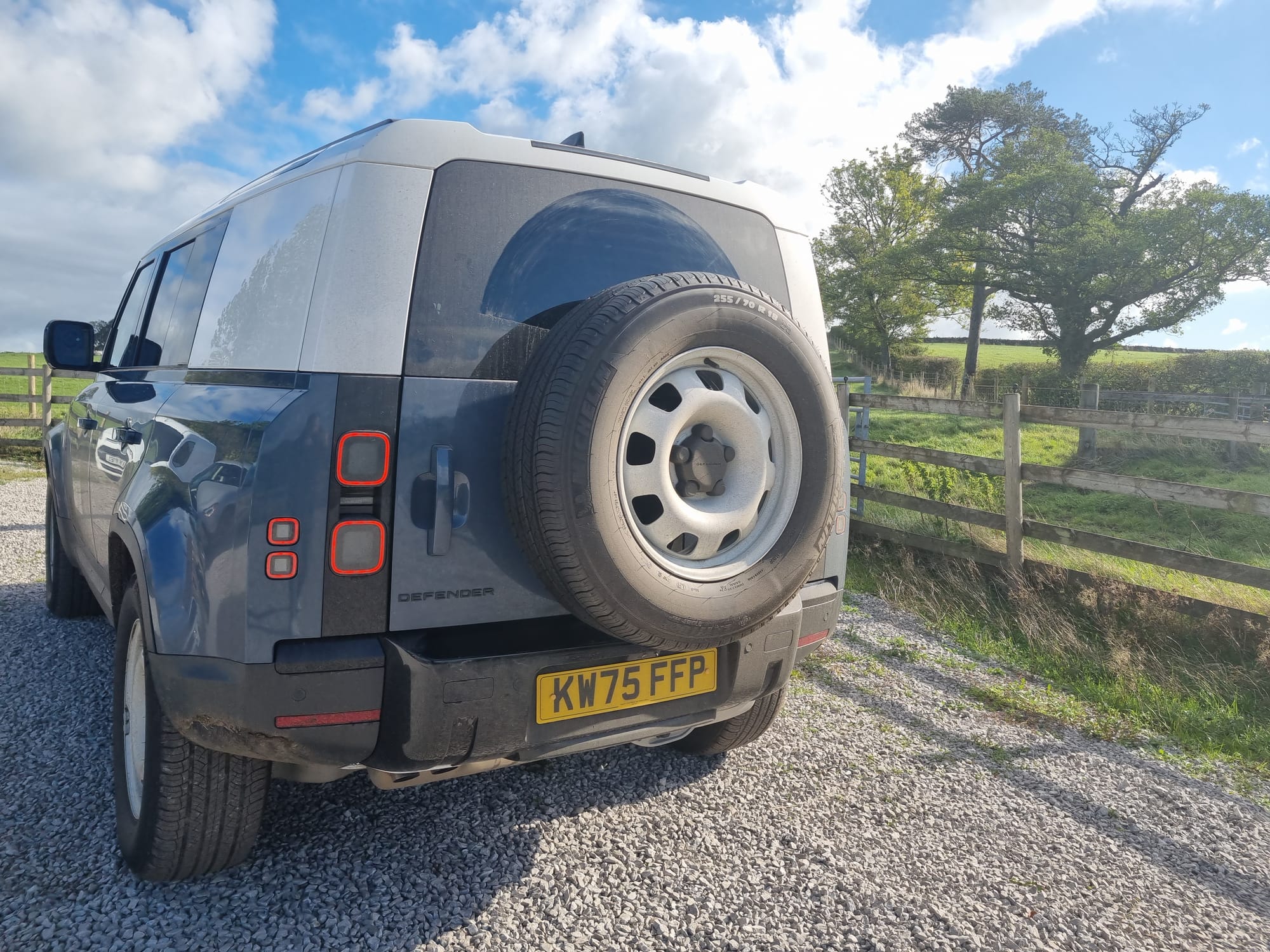
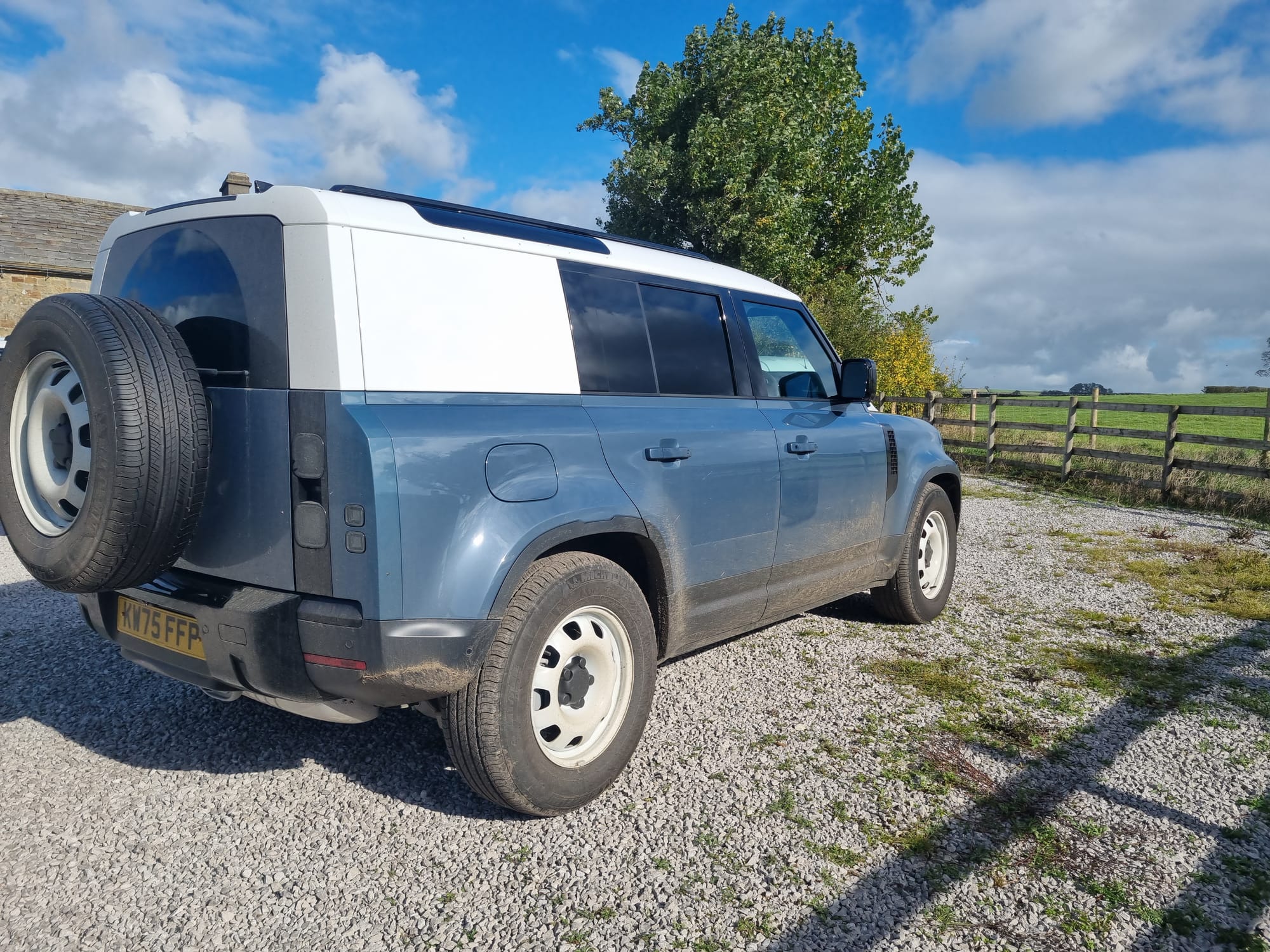
White Steel Wheels
Let us briefly discuss something entirely irrational.
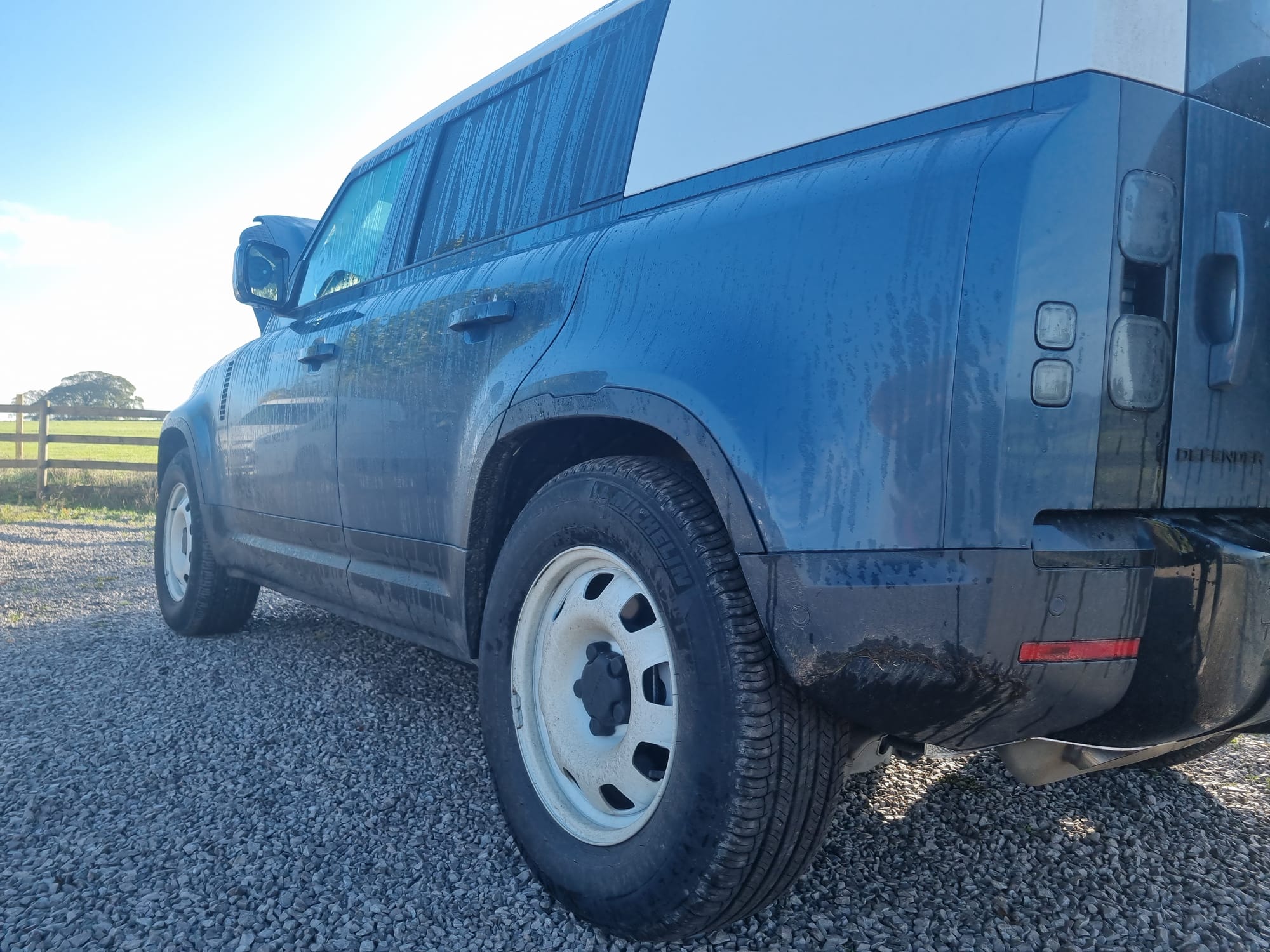
Our Caspian Blue vehicle wore white steel wheels.
They looked magnificent.
There.
We've said it.
Modern premium SUVs tend to treat ever-larger alloy wheels as evidence of progress, while a Defender on simple white steels immediately looks like it has somewhere useful to be.
JLR still offers wheel choices across a wide range of sizes and finishes.
The exact specification varies by model, but our conclusion required no measurement whatsoever:
white steel wheels + blue Defender = correct.
Curiously, simplicity doesn't necessarily mean cheaper.
Somewhere, an accountant is presumably able to explain this.
How Commercial Is Commercial?
There is a more serious issue here.
The Defender Hard Top is an N1 commercial vehicle.
That matters for more than tax treatment.
In Great Britain, most light commercial goods vehicles are subject to 50mph on single carriageways and 60mph on dual carriageways, while remaining at 70mph on motorways when not towing. Car-derived vans and qualifying dual-purpose vehicles can use car limits, but other light goods vehicles generally cannot.
Owners should therefore establish the classification applicable to their particular vehicle rather than assume that because it looks like the passenger Defender parked next to it, identical speed rules necessarily follow.
The increasing sophistication of enforcement only makes understanding the vehicle you've bought more important.
An Interesting Alternative Question
And this became the question we kept returning to.
Does every rural business actually need the Hard Top?
For particular uses, absolutely.
Secure equipment transport matters.
Permanent load space matters.
A full bulkhead matters.
Underfloor storage matters.
Commercial-vehicle status may matter.
But many rural businesses need something more ambiguous.
Monday:
People.
Tuesday:
Tools.
Wednesday:
Feed.
Thursday:
A client.
Friday:
Something filthy.
Saturday:
Family.
For those users, there remains a persuasive simplicity to a passenger Discovery or Defender with folding seats and a properly tailored rubber load liner.
Seats when you need them.
Van when you don't.
That's essentially how parts of our own FVC fleet operate.
The Hard Top is more purpose-built.
The passenger vehicle can be more adaptable.
Those aren't necessarily the same thing.
Load It Up
JLR's figures illustrate how serious the Hard Top is.
A current 110 D250 Hard Top specification lists a gross vehicle weight from 3,150kg to 3,260kg, depending upon seating and suspension, against DIN unladen weights from 2,393kg to 2,424kg.
That gives considerable payload potential, although the exact legal payload of an individual vehicle must take account of its actual specification, occupants, accessories, fluids and axle limits. JLR itself warns that accessories affect payload and GVW/axle limits must not be exceeded.
Our notes contain a suggestion that we express this in Dead Sheep Weight Carrying Index (#DSWCI).
RBI's technical department has declined to standardise the sheep because sheep have inconsiderately failed to adopt a uniform mass.
Probably for the best.
Classic Defender Character?
This is perhaps where feelings become complicated.
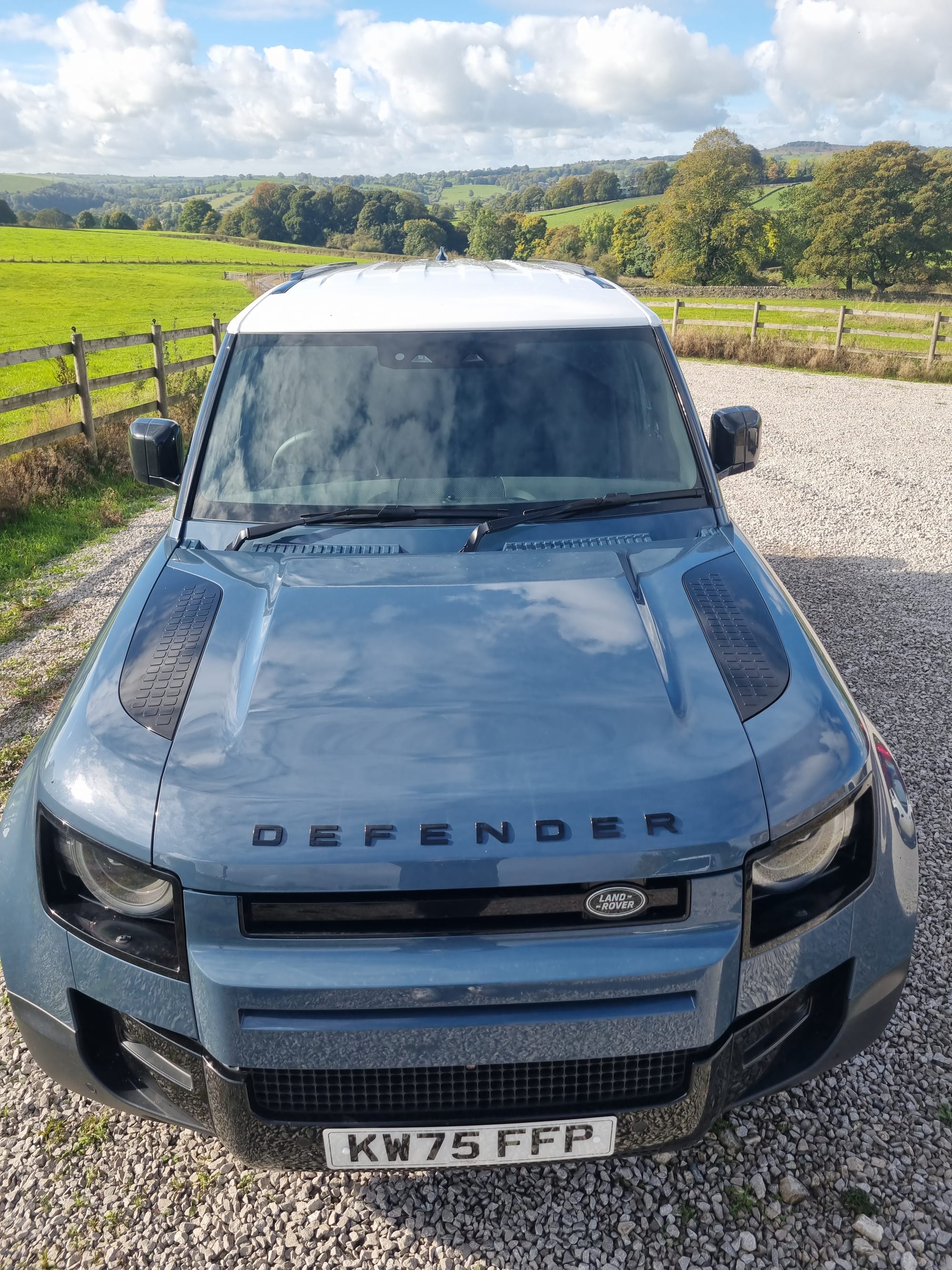
Classic Defenders acquire patina.
Scratches become stories.
Dents develop provenance.
Mud is almost an accessory.
We aren't convinced owners of new Defenders will feel quite the same when a gatepost introduces itself to a beautifully finished body panel.
The modern Defender is enormously more refined.
The difficulty is that refinement changes the relationship.
You might hose a Classic Defender out.
The new vehicle has durable rubber flooring and genuinely hard-wearing interior architecture, but it doesn't invite quite the same agricultural brutality. JLR itself describes the cabin flooring and exposed structural surfaces as intentionally durable.
That's not really a failing.
It's simply a different Defender.
And increasingly, we suspect the market understands that.
So, Would We Buy One?
Annoyingly, yes.
We rather love it.
Not unconditionally.
The jump seat doesn't solve three-adult travel nearly as convincingly as we'd hoped.
The commercial body sacrifices some of the wonderful visibility and flexibility we're accustomed to.
Some touchscreen functions are less convenient with gloves than traditional controls.
And our existing Discovery 4s remain difficult vehicles to displace because they combine extraordinary practicality with five proper seats and a cabin that still feels surprisingly difficult to improve upon.
If we were choosing purely for FVC's particular mixed-use requirements?
A passenger Discovery would probably still take first place.
The Defender Hard Top comes second.
A very close second.
And Mrs Smart would apparently ignore this entire review and just take the Defender.
Which may ultimately be the most comprehensive consumer research we've conducted.
The RBI Verdict
The Defender 110 Hard Top succeeds because it isn't pretending to be something it isn't.
The 2,059-litre loadspace, clever underfloor storage, side access, towing capacity and commercial construction are genuine working features rather than outdoorsy styling cues.
Its D250 diesel provides 249hp and 570Nm, with 3,500kg maximum braked towing on the specification checked.
At the same time, this is no bare-bones spiritual recreation of a Classic Defender.
It is quiet.
Comfortable.
Technologically dense.
Expensive.
And considerably too nicely finished for us to feel enthusiastic about introducing the interior to half a Derbyshire field. Although the boss considered power sliding it across one… but we wanted brunch – and he was paying.
Perhaps that is the modern Defender's real achievement.
It has become more civilised without ceasing to be useful.
Whether that makes it the right vehicle for a particular rural business depends less on its capabilities than on the job it's actually being asked to do.
If you genuinely need permanent secure loadspace, substantial towing ability, serious off-road capability and long-distance comfort in one vehicle, the Hard Top makes a compelling case.
If you need five seats on Thursday and a bale carrier on Friday?
Think carefully before sacrificing the second row.
And if you need three adults across the front for a 200-mile road trip #TouringGrandly?
Well.
We've already done the research, and a YouTube Short Video clears it up @Ruralbusinessinsights.
You may want to sit down before watching the result.
Watch out for our full video discussing the Defender on our YouTube channel at the end of October.
Specification snapshot
- Engine: 2,997cc inline-six D250 diesel mild hybrid
- Power: 249hp
- Torque: 570Nm
- Transmission: 8-speed automatic
- Driveline: AWD
- 110 Hard Top loadspace: up to 2,059 litres wet
- Load length: 1,472mm
- Load width: 1,423mm
- Load height: 937mm
- Forward underfloor storage: 155 litres
- Rearward underfloor storage: 58 litres
- Maximum braked towing: 3,500kg
- Vehicle classification: N1 commercial vehicle
Price at Testing: £75,430 inc. options
View the current vehicle range and latest availability:
https://www.landrover.co.uk/fleet-and-business/index.html
Fleet Managers can contact our team directly here: