FEWER FARMS, BIGGER BUSINESSES? What Two Decades Of Change Might Mean For Rural Communities
Farm numbers may be falling, but agricultural land remains largely unchanged. The more important question is what consolidation means for rural businesses, communities and the future shape of the sector.

FEWER FARMS, BIGGER BUSINESSES?
What Two Decades Of Change Might Mean For Rural Communities
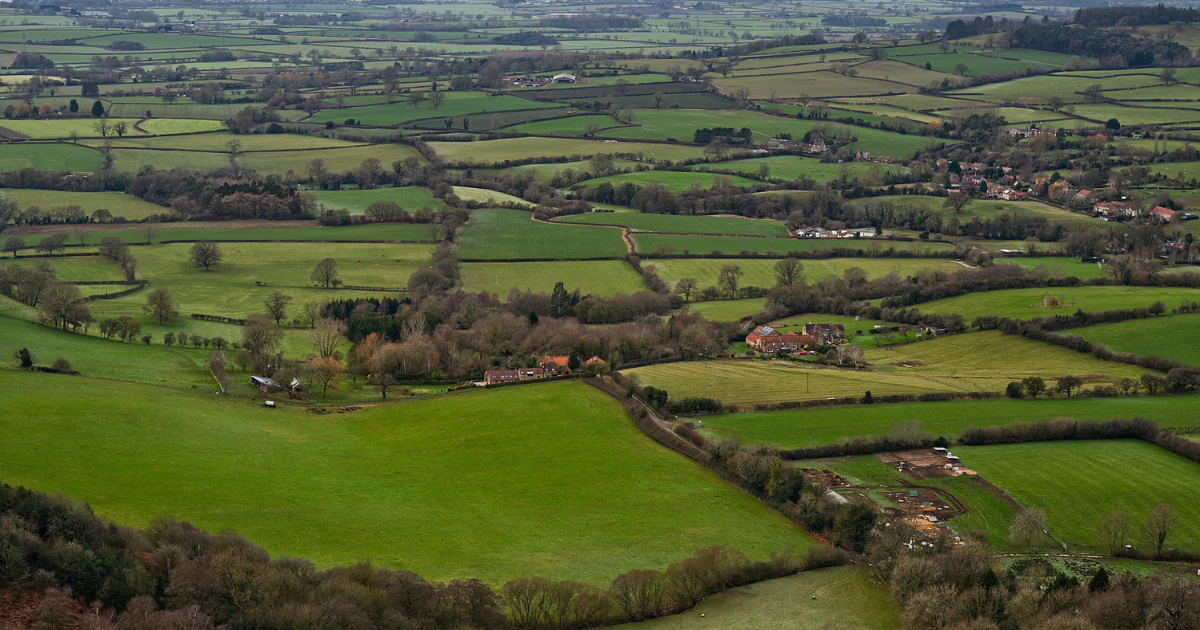
The British countryside can often appear remarkably unchanged.
Fields remain in production.
Livestock continue to graze.
Hedgerows still divide farms and estates.
Yet beneath the surface, agriculture continues to evolve.
Recent analysis based on Defra agricultural data suggests that the number of agricultural holdings in England declined from approximately 247,500 in 2005 to 211,500 in 2025, a reduction of around 36,000 holdings, or 14.6%, over two decades. [thescottis...rmer.co.uk], [farminguk.com]
The figure is significant.
However, understanding what it means requires a little more thought.
A Holding Is Not Always A Farm
The first point worth recognising is that an agricultural holding is an administrative unit rather than a direct measure of individual farm businesses.
Importantly, the data should not be interpreted as evidence that 36,000 family farms have simply disappeared. The figures reflect wider structural changes including:
- Farm amalgamations.
- Business restructuring.
- Retirement.
- Land sales.
- Expansion by neighbouring businesses.
As land changes hands, holdings often combine into larger operational units. [thescottis...rmer.co.uk], [farminguk.com]
The landscape may still be farmed.
What changes is who farms it and how.
The Land Has Not Disappeared
One of the most interesting findings is that agricultural land itself has remained relatively stable.
Across the UK, utilised agricultural area stood at approximately 16.8 million hectares in 2025, representing around 69% of the country's land area. [thescottis...rmer.co.uk], [farminguk.com]
In other words:
England is not losing farmland at the same rate it is losing holdings.
The more obvious trend appears to be consolidation.
Fewer businesses are managing larger areas.
Why Is This Happening?
There is unlikely to be a single explanation.
Instead, multiple pressures appear to be influencing long-term change.
Rising Capital Requirements
Modern agriculture requires significant investment in:
- Machinery.
- Buildings.
- Technology.
- Compliance.
For many businesses, achieving sufficient scale becomes increasingly important.
Retirement And Succession
Agriculture remains heavily dependent on family ownership and succession.
Where successors are unavailable or unwilling to continue, neighbouring businesses often acquire land and assets. [thescottis...rmer.co.uk], [farminguk.com]
Technology
New technology can increase productivity dramatically.
However, technology often favours businesses capable of spreading costs across larger areas or greater output.
Efficiency Pressures
Competitive markets continuously reward efficiency.
This naturally encourages growth, consolidation and operational restructuring.
"The landscape may look unchanged. The structure of the businesses operating within it may not be."
The Rural Community Question
Perhaps the most important issue is not agricultural production.
It is community.
When a holding disappears through consolidation, local consequences can follow:
- Fewer principal businesses.
- Fewer rural employers.
- Changes in contracting patterns.
- Reduced demand for local services.
- Pressure on succession opportunities.
A countryside can remain productive while simultaneously experiencing fundamental economic and social change.
The challenge is measuring both.
The Collaboration Alternative
One of the recurring themes emerging throughout this edition of Rural Business Insights is collaboration.
Historically, growth has often been achieved through acquisition.
More land.
More machinery.
More assets.
Increasingly, collaboration may provide a different route.
Shared machinery.
Knowledge exchange.
Joint ventures.
Shared labour.
Professional networks.
For some businesses, collaboration may offer the benefits of scale without requiring ownership expansion.
What Does Success Look Like?
The discussion ultimately raises an important question:
Does success mean becoming larger?
For some businesses, the answer may be yes.
For others, success might mean:
- Maintaining independence.
- Improving profitability.
- Strengthening resilience.
- Diversifying income.
- Building succession opportunities.
Size is only one measure of performance.
It is not the only one.
Final Thought
The reduction in agricultural holdings tells us something important.
Agriculture is not standing still.
The industry continues to adapt in response to economics, technology, succession and changing business models. [thescottis...rmer.co.uk], [farminguk.com]
Whether this trend ultimately strengthens or weakens rural communities will depend not only on scale, but on how businesses choose to respond.
The future may not belong solely to the largest businesses.
It may belong to those most capable of adapting, collaborating and creating value in an increasingly complex environment.
Because the real question is not:
How many farms remain?
It is:
What sort of rural business is most likely to succeed over the next twenty years?
Editor's Reflection
This article sits naturally beside:
- Collaboration
- Harvest Resilience
- Technology & Skills
- Dairy Profitability
because all four are ultimately exploring the same theme:
How do rural businesses remain resilient in a changing world?