AGROFORESTRY: Opportunity, Obligation or Competitive Advantage?
Exploring whether agroforestry represents an obligation, an opportunity or a genuine source of competitive advantage for modern rural businesses.

For many years, agroforestry was often viewed as something of a niche concept within British agriculture.
Trees belonged in woodlands.
Livestock belonged in fields.
Arable crops belonged in fields.
The two rarely interacted beyond shelter belts, hedgerows or isolated field corners.
Yet that perception appears to be changing.
Today, agroforestry is attracting increasing attention from policymakers, researchers and farm businesses alike. Dedicated Government guidance, planning support and grant funding are now available, while examples from across the country are demonstrating how trees can form part of productive farming systems rather than compete with them. [gov.uk]
The question facing many businesses is no longer:
"What is agroforestry?"
It is:
"Could agroforestry create value within my farming business?"
What Is Agroforestry?
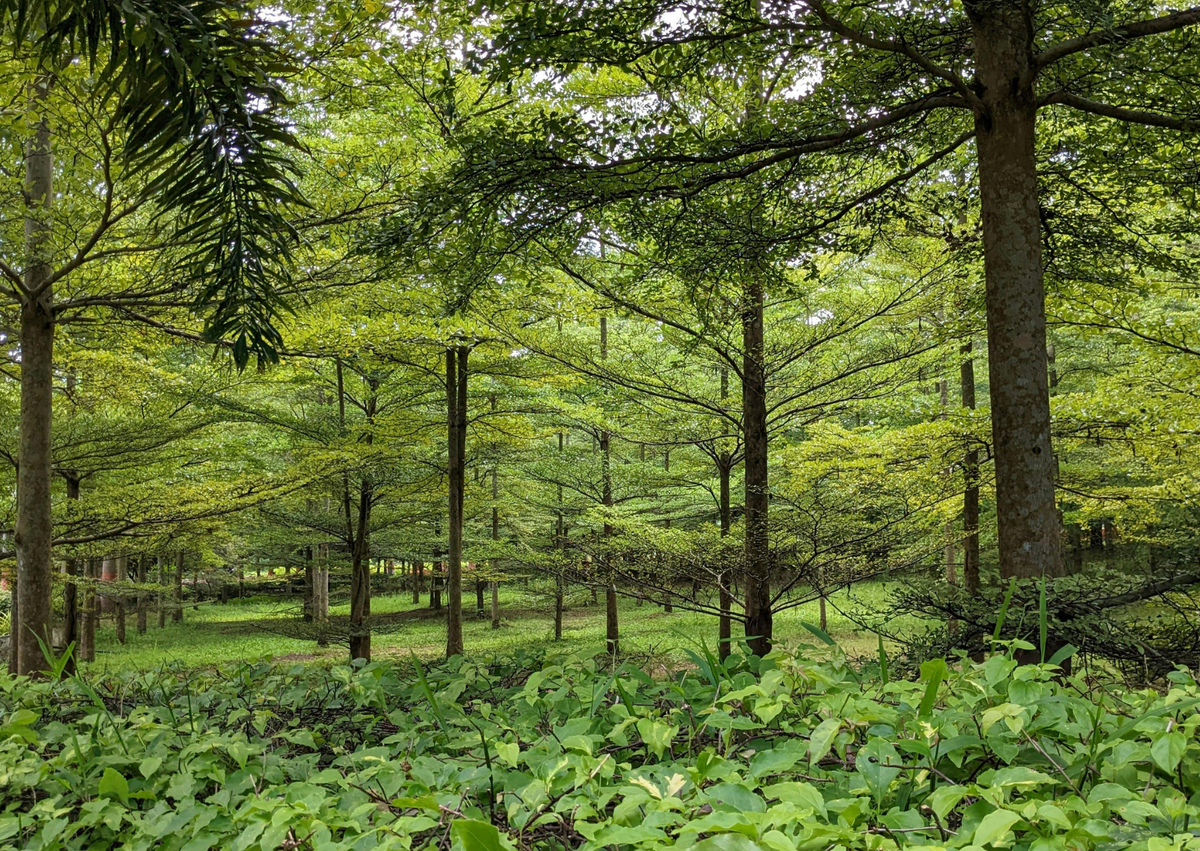
At its simplest, agroforestry involves integrating trees with agricultural production.
That may include:
- Trees within grazing systems.
- Silvopasture systems combining livestock and trees.
- Tree rows within arable land.
- Riparian planting alongside watercourses.
- Orchard and grazing combinations.
- Shelter belts integrated into productive farmland.
The key point is that land continues to be farmed.
This is not necessarily about converting agricultural land into woodland.
It is about exploring whether trees and farming can work together in ways that enhance the overall system. [gov.uk]
Why Is Interest Increasing?
Several factors appear to be driving renewed interest.
Climate Resilience
Agricultural businesses are increasingly considering how weather patterns may affect long-term productivity.
Trees can contribute to:
- Shelter from wind.
- Reduction in heat stress.
- Improved water management.
- Soil protection.
While these benefits will vary considerably between businesses, they are increasingly part of discussions about farm resilience.
Livestock Welfare
For livestock systems, shelter can be particularly valuable.
Trees may provide:
- Shade during hot weather.
- Protection during extreme conditions.
- Improved comfort for grazing livestock.
In some situations, these benefits may have productivity implications as well as welfare advantages.
Environmental Opportunities
Environmental delivery continues to play a growing role in agricultural policy.
Trees may contribute towards:
- Biodiversity enhancement.
- Habitat connectivity.
- Water quality objectives.
- Carbon-related opportunities.
Government support schemes increasingly recognise these potential benefits. [gov.uk]
The Business Case Matters
While environmental outcomes often receive attention, the most important question for many farm businesses remains economic.
The reality is that trees occupy space.
Establishment costs are incurred.
Management requirements increase.
Returns may take years to materialise.
Consequently, agroforestry should not be viewed simply as an environmental measure.
It should be evaluated as a business decision.
Questions worth considering include:
- What problem are we trying to solve?
- Does this support the wider business strategy?
- What are the costs and benefits?
- How will productivity be affected?
- Are there funding opportunities available?
- What is the long-term objective?
As with any investment, the strongest decisions begin with understanding the reasons behind them.
Agroforestry should not be viewed simply as an environmental measure. It should be evaluated as a business decision.
Not Every Farm Needs More Trees
It is important to recognise that agroforestry is not a universal solution.
What works well within one farming system may be entirely inappropriate within another.
Land type.
Enterprise mix.
Infrastructure.
Labour availability.
Business objectives.
Family aspirations.
All influence whether agroforestry is likely to create value.
The objective should never be to follow a trend.
The objective should be to understand whether a particular approach strengthens the business.
Looking Beyond Funding
Government grants and funding opportunities can undoubtedly help reduce the cost of introducing agroforestry systems, and support is currently available for planning and implementation activities. [gov.uk]
However, grants are rarely a sufficient reason on their own to undertake a major land-use change.
The most successful projects are often those where:
- The business rationale is clear.
- The long-term objective is understood.
- Funding simply helps accelerate delivery.
In other words:
The project makes sense first.
The grant helps make it happen.
Final Thought
Perhaps the most interesting aspect of agroforestry is not the trees themselves.
It is what the discussion represents.
Agriculture is increasingly being asked to think about productivity, environmental delivery, resilience, biodiversity and long-term sustainability simultaneously.
Agroforestry sits at the intersection of those conversations.
For some businesses it may prove unsuitable.
For others it could create genuine strategic advantage.
The challenge is not deciding whether agroforestry is good or bad.
The challenge is understanding whether it is right for your business.
Because, as with most opportunities in farming, context matters far more than headlines.
Questions Worth Asking
✅ What challenge are we trying to solve?
✅ What opportunity are we seeking to create?
✅ How will trees contribute to business performance?
✅ What impact will this have on agricultural production?
✅ What support and funding are available?
✅ Does this support our long-term objectives?
Know where you stand before deciding where to go