Food, Incentives and Resilience: Are We Asking Rural Businesses to Deliver Conflicting Outcomes?
As expectations of rural businesses continue to expand, an important question is emerging: can food production, environmental delivery and business resilience always be achieved through the same incentives?

For several years, the direction of travel for agricultural policy seemed relatively clear.
Farmers were encouraged to improve biodiversity, create habitat, protect soils and deliver environmental outcomes alongside food production. Schemes such as AB6 (Enhanced Overwintered Stubble) and AB8 (Flower-Rich Margins and Plots) rewarded businesses for providing environmental benefits and, in many cases, offered relatively predictable returns.
Few would argue these objectives were without merit.
The countryside benefits from improved biodiversity. Pollinators matter. Healthy soils matter. Wildlife matters.
The challenge is that another conversation is now emerging alongside those objectives.
Food security.
A Changing Narrative
Recently, food has been formally recognised as one of the United Kingdom's Critical National Infrastructure sectors. Food security and supply chain resilience are increasingly appearing in discussions that would previously have focused on energy, transport or communications.
At the same time, recent analysis highlighted by Harry Metcalfe of Harry's Farm suggests that UK food self-sufficiency has fallen from approximately 78% in the 1980s to around 60% today. imageturn0upload0†image.png (Image: UK food self-sufficiency decline chart)
Whether that figure moves a few percentage points in either direction is less important than the trend itself.
The direction of travel is clear.
As a nation, we are increasingly dependent on food produced elsewhere.
That raises an awkward question.
If producing food is strategically important, are we creating the conditions that make producing food economically attractive?
Businesses Respond to Incentives
One of the most illuminating parts of Harry's discussion was not the politics.
It was the economics.
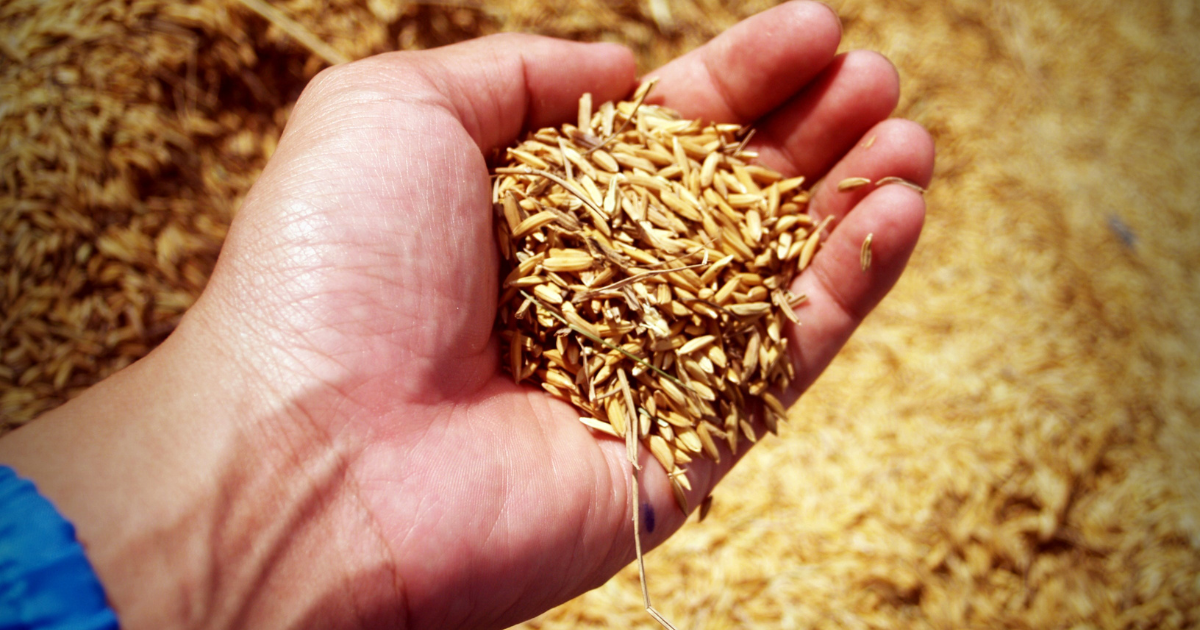
Using his own figures, Harry demonstrated that land entered into certain stewardship options generated a higher gross return per hectare than growing wheat during the same period.
Depending on the scheme and assumptions used, stewardship income was generating approximately £210-£240 per hectare, whilst wheat on his farm generated a gross return closer to £200 per hectare.
This is not an argument against environmental schemes.
Far from it.
The schemes delivered precisely what they were designed to deliver.
The point is simpler.
Businesses respond to incentives.
They always have.
If one activity offers:
- Lower risk
- Fewer inputs
- Less exposure to weather
- Greater certainty
then it should not be surprising when rational businesses choose that option.
The Food Production Dilemma
This creates a dilemma.
Society increasingly expects farmers to:
- Produce food.
- Improve biodiversity.
- Protect water.
- Improve soil health.
- Sequester carbon.
- Enhance landscapes.
- Increase resilience to climate change.
The reality is that farms operate within finite resources of:
- Time.
- Labour.
- Capital.
- Land.
When those objectives align, progress is relatively straightforward.
When they conflict, difficult decisions emerge.
If food production is considered strategically important, then policymakers must consider whether current incentives support that outcome.
The Manor Farm Example
Closer to home, Manor Farm Shop recently shared details of an interesting experiment.
The business, operating on land not typically associated with arable production, is trialling winter wheat.
Not because they suddenly wish to become cereal growers.
Not because they believe wheat prices are irresistible.
But because they are looking at ways to:
- Increase feed value.
- Reduce purchased fodder.
- Improve resilience.
- Generate greater value from resources already available on the farm.
In other words, they are examining the business model.
That is an important distinction.
The question is not:
"Can we grow wheat?"
The question is:
"Can we strengthen the business?"
The willingness to experiment, learn and adapt may ultimately prove more valuable than the crop itself.
Where Does Value Actually Sit?
Another point explored in Harry's presentation concerns the economics of food itself.
Using the example of a loaf of bread retailing at approximately £1.20, only a relatively small proportion of the final value relates directly to the wheat. imageturn0upload0†image.png (Image: Bread price cost breakdown)
The remainder is distributed across:
- Labour.
- Processing.
- Energy.
- Packaging.
- Transport.
- Distribution.
- Retail margins.
This highlights something many businesses throughout the rural economy are already recognising.
The greatest opportunities often exist beyond production alone.
Businesses such as:
- Tagg Lane Dairy.
- Stanedge Grange.
- Manor Farm Shop.
have all identified ways to create more value beyond the farm gate through branding, retailing, processing and direct customer relationships.
Perhaps the future conversation is not simply about producing more food.
Perhaps it is also about retaining more value from the food we produce.
Resilience Is the Real Story
Ultimately, this is not a debate about stewardship versus production.
Nor is it an argument for abandoning environmental progress.
The real issue is resilience.
A resilient food system requires:
- Resilient farms.
- Resilient supply chains.
- Resilient businesses.
- Resilient communities.
None of those are possible if farming businesses cannot generate sustainable returns.
For years the conversation has focused on environmental resilience.
Today, there are increasing signs that economic and food resilience are moving closer to the centre of national thinking.
That does not mean reversing course.
But it may mean asking a difficult question:
If domestic food production is strategically important, are we incentivising enough domestic food production?
Because businesses will continue to respond to incentives.
The question is whether those incentives are aligned with the outcomes society wishes to achieve.
And that, perhaps, is one of the most important rural business conversations of our time.