DEFRA’s Collaboration Fund: Confirmation of a Direction of Travel?
DEFRA's new Collaboration Fund suggests that partnership, scale and shared investment may play an increasingly important role in the future direction of agricultural policy.

When the Government published its Farming Roadmap earlier this year, much of the attention focused on productivity, resilience and environmental delivery.
Less attention was paid to another, more subtle theme running throughout the document.
Collaboration.
In previous articles, I suggested that the Roadmap might signal a future in which successful farm businesses would increasingly need to think beyond the farm gate. Not necessarily through mergers or large-scale restructuring, but through practical forms of cooperation, federation and partnership designed to improve resilience and competitiveness.
At the time, that interpretation was partly observation and partly hypothesis.
This week’s announcement of DEFRA’s new £30 million Farmer Collaboration Fund may be the clearest indication yet that the direction of travel was broadly correct. DEFRA states that the fund is intended to help farmers share knowledge, reduce costs, spread risk and access opportunities that are difficult to secure individually. It will support local facilitators, start-up assistance for collaboration groups and activities that strengthen access to investment opportunities.
The significance lies not in the funding itself.
It lies in what the funding reveals.
From Assets to Capability
Historically, many support schemes have focused on physical assets.
Buildings.
Machinery.
Equipment.
Technology.
Environmental interventions.
The Collaboration Fund feels different.
Instead of funding what businesses own, it appears designed to support how businesses work together. DEFRA’s announcement repeatedly references resilience, knowledge sharing, coordination and collective action.
That is an important distinction.
A resilient farming sector is not simply a collection of resilient farms.
It is a network of businesses capable of adapting, learning and responding together when circumstances change.
The Return of Federation?
The word “federation” can sometimes feel uncomfortable in agriculture because it evokes images of bureaucracy, corporate structures or loss of independence.
That is not necessarily what is emerging.
Instead, we may be witnessing the gradual development of more flexible forms of collaboration.
Examples could include:
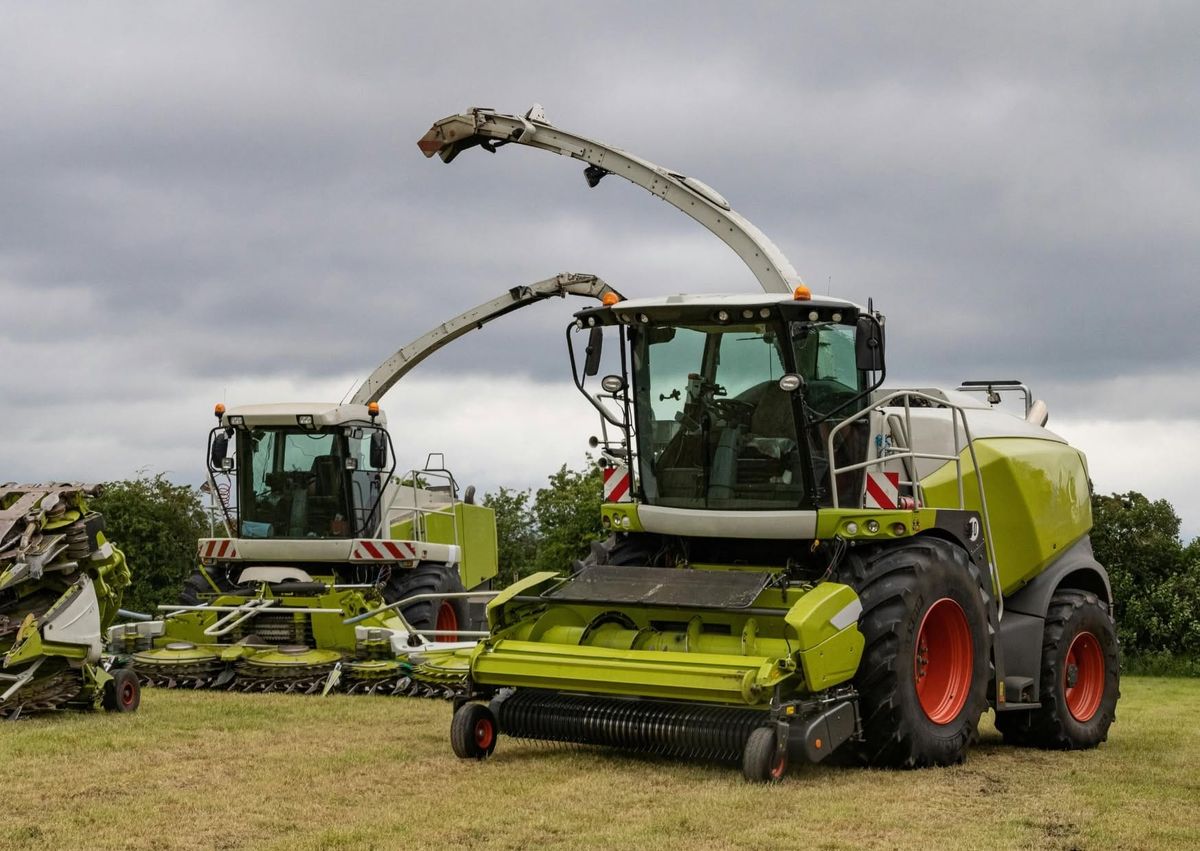
- Machinery-sharing arrangements.
- Joint purchasing groups.
- Producer collaborations.
- Shared specialist expertise.
- Landscape-scale environmental delivery.
- Joint diversification projects.
- Knowledge exchange networks.
- Investment partnerships.
Most of these already exist in some form.
What appears to be changing is the degree to which policy now actively supports them.
The Roadmap hinted at this possibility.
The Collaboration Fund provides practical evidence that Government sees value in helping farmers achieve more together than they could alone.
Independence Still Matters
Importantly, this should not be interpreted as a call for every farm to join a cooperative or collaboration group.
The right question is not:
“How do we collaborate?”
The right question is:
“Where does collaboration create value?”
For some businesses the answer may be nowhere.
For others, collaboration could unlock opportunities that are difficult to achieve independently.
The strategic challenge is understanding the difference.
A Whole Farm & Business Review Perspective
This is where strategic business analysis becomes increasingly important.
Before deciding whether collaboration is appropriate, businesses need to understand:
- financial performance;
- enterprise profitability;
- labour requirements;
- succession pressures;
- capital demands;
- future investment requirements.
Only then can collaboration be evaluated objectively.
A business that understands where it stands is far more likely to identify where collective action strengthens its position and where independence remains its greatest strength.
A Signal, Not A Destination
Perhaps the most interesting aspect of the announcement is that it supports a broader interpretation of the Farming Roadmap itself.
The Roadmap should not be viewed as a fixed blueprint for the future.
It is better understood as a direction of travel.
This latest announcement suggests that direction includes:
- greater resilience;
- stronger business capability;
- increased knowledge sharing;
- collaborative problem-solving;
- more coordinated approaches to investment and opportunity.
The exact shape of those arrangements will vary between sectors, regions and businesses.
However, the message is becoming clearer.
Future competitiveness may depend not only on what individual businesses can do alone, but also on what they can achieve together.
The Farmer Collaboration Fund may therefore prove to be more than another grant scheme.
It may be the first tangible sign that the collaborative future hinted at within the Farming Roadmap is beginning to take shape.